

Space Invaders Game
This project marks one of my earliest hands-on experiences with programming. Built for an Algorithm & Programming course, it helped me understand how code can become an interactive experience.
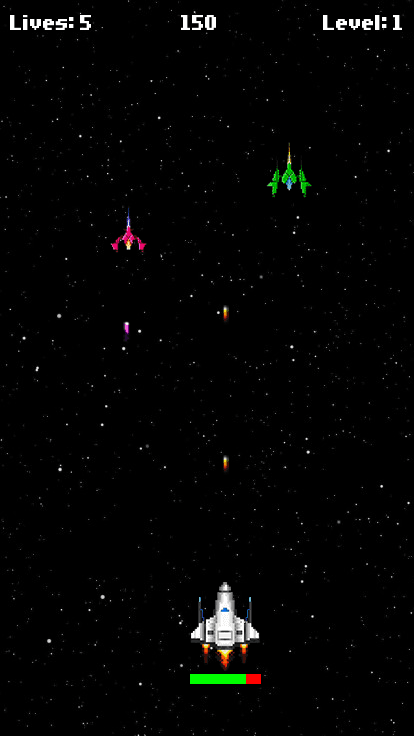
Figure 1.0: Start menu screen built in Pygame using custom assets. Hover/click image to zoom.
Classic Arcade Logic, Built from Scratch
This was my first Python game project, built during 2022 in my early university days for an Algorithm & Programming class. It was not built using modern templates or pre-made frameworks, but instead written line by line using Pygame through constant trial and error.
It represents an honest, nostalgic starting point in my journey as a programmer. Spending around two weeks coding it, I learned how to move beyond static logic and translate concepts into active systems. Through debugging issues with coordinates, memory leaks, and overlapping hitboxes, I gained my first real understanding of object-oriented programming, game loops, event handling, collision detection, and sprites.
Archive Stats
Python 3
Pygame
2022 (University)
Reflective Archive
Game Mechanics & Elements
The structural elements I integrated into the application to create a functional arcade experience.
Visual Progression
Original, uncropped snapshots showing different phases of the arcade loop.
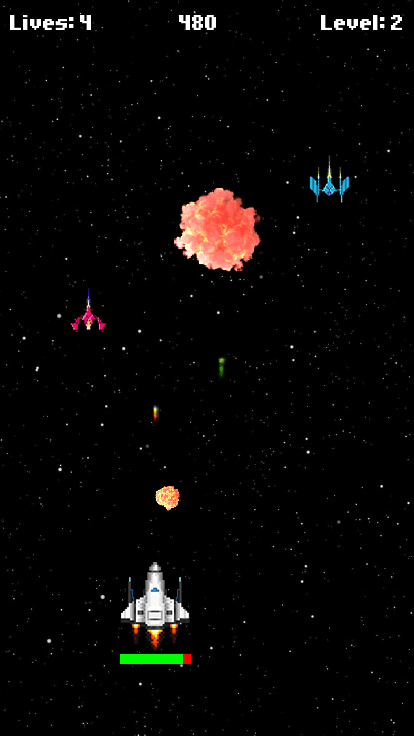
Gameplay Phase
Active SwarmReal-time alien swarm tracking, protective shields degradation, and player score counting.
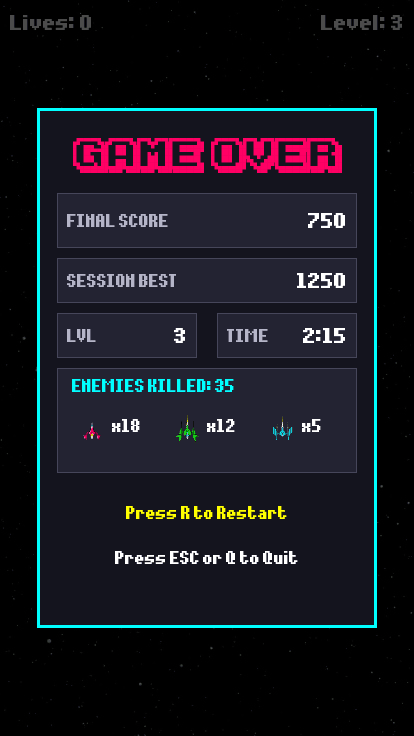
Game Over State
Final SummaryFinal stats overview display and clear interactive options to retry or exit the game loop.
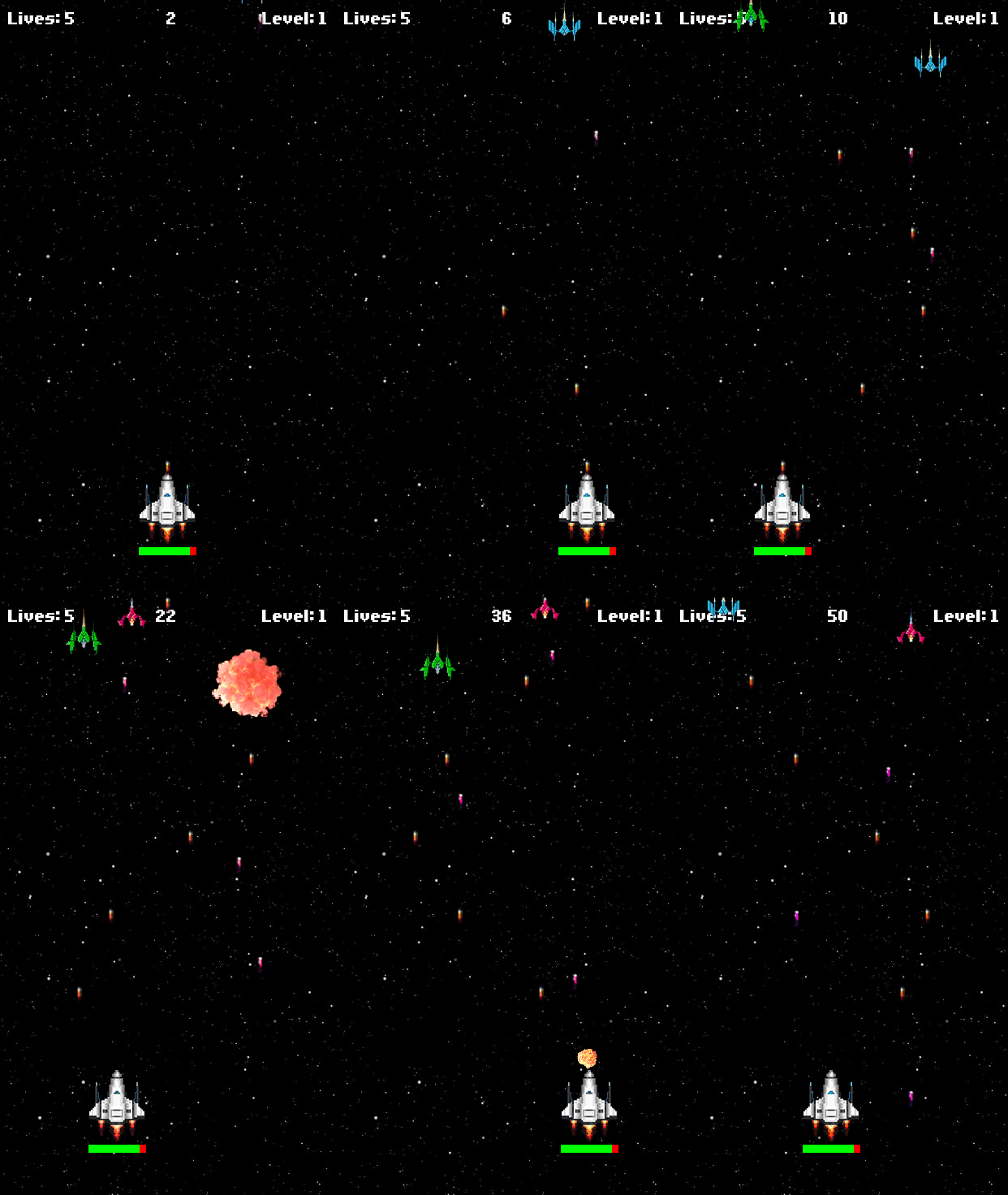
Live Gameplay Loop
Animation DemoFull speed simulation demonstrating ship movement, laser projectile speeds, alien path updates, and collision explosions.
Designed in Photoshop
I designed the spaceship/jet assets myself in Photoshop, which made the project feel more personal and helped me understand how visual assets affect gameplay clarity. Coordinating coordinates for projectile nozzles and center alignments with my custom pixel bounds was a highly rewarding, hands-on design process.
Core Technical Milestones
The primary software architecture milestones achieved during this early codebase construction.
Python Fundamentals
Building robust logical logic structures, manipulating loop speeds, and exploring custom functions for game loops.
Object-Oriented Programming
Structured modular classes for game entities (Ships, Aliens, Lasers) enabling clean property inheritance and instance creation.
Game Loop Logic
Constructed a constant loop mapping state processing, real-time value updates, and Pygame surface drawings on every tick.
Event Handling
Captured active keyboard press states to govern ship adjustments and trigger real-time projectile launches safely.
Collision Detection
Calculated bounding box overlaps using coordinates to register impact hits, update lives, and trigger explosion sprites.
Sound Systems
Mapped Pygame audio events for shooting and explosion feedback, while controlling volume so the sound effects support gameplay without overwhelming the player.
Humble Beginnings
This game is not here because it is the most advanced project in my portfolio. It is here because it represents my first real step into building something interactive. It reminds me of the process of learning through trial, error, documentation, debugging, and persistence.
Ready to Defend the Galaxy?
The game has been compiled and is ready for trial run. Open the live deployment link in a new tab, or review the original Python source logic.
Explore More Projects
Continue exploring selected data, analytics, and machine learning projects.
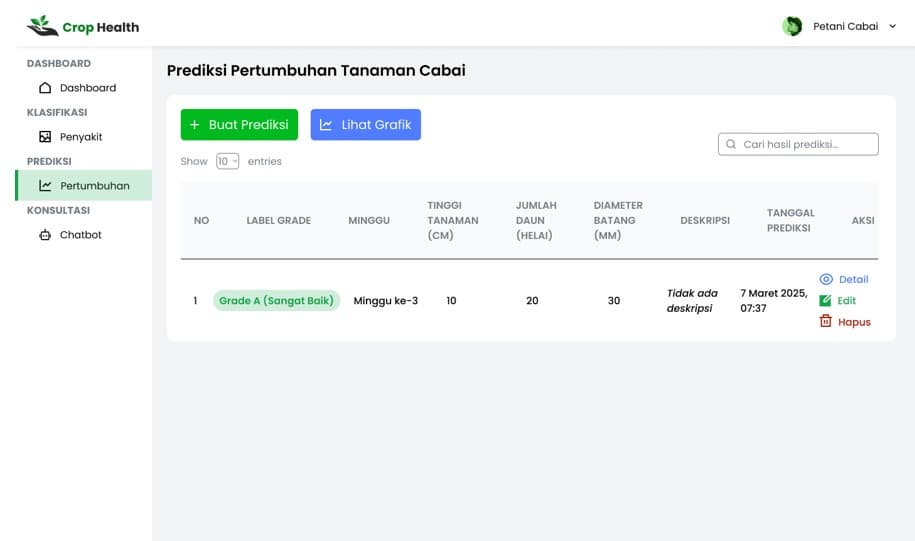
Chili Quality Classification
Built a Two-Stage XGBoost classification pipeline to automate agricultural quality control. Explored thorough Exploratory Data Analysis (EDA) and compared decision trees, RF, SVM, and MLP models before isolating XGBoost due to a superior ~83% accuracy and ~82% macro F1 score. Emphasized end-to-end data science workflows over simple model APIs.
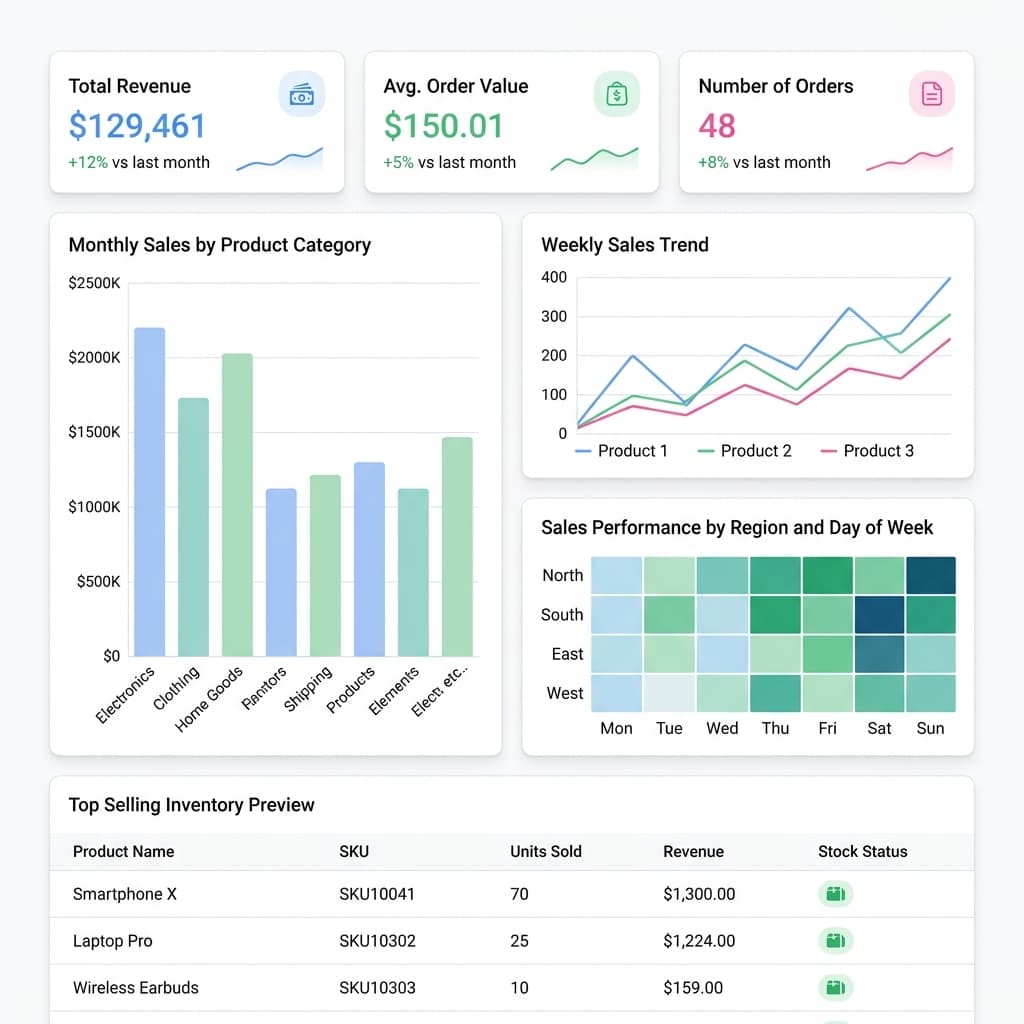
Retail Inventory Optimization & Demand Analysis
A SQL-based exploration into how inventory, demand forecasting, and sales interact, with a focus on identifying inefficiencies and turning data into actionable business insights.
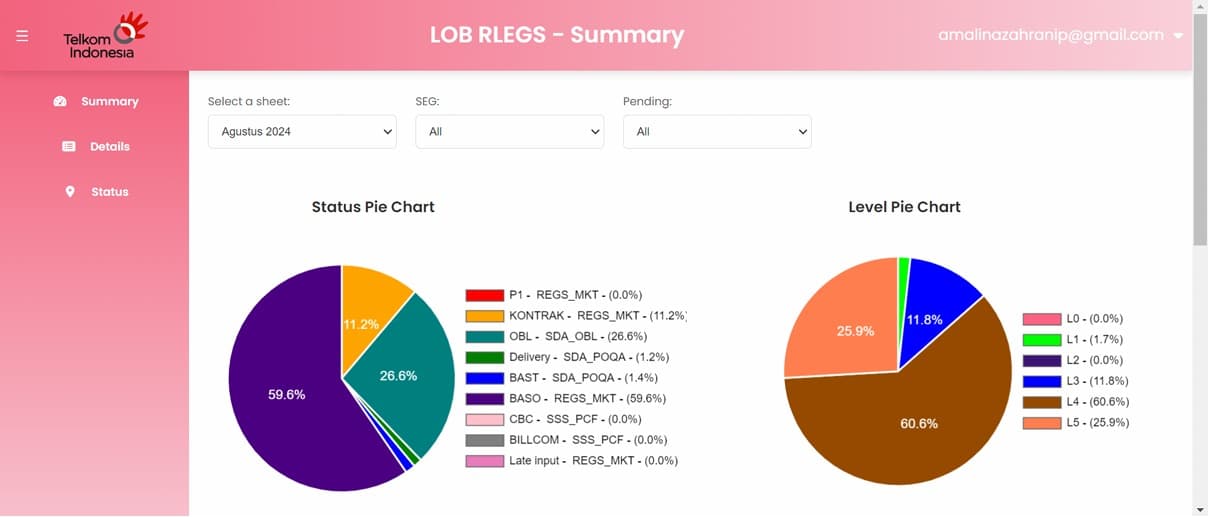
Telkom Indonesia – Enterprise Dashboard Visualization System
Developed enterprise-grade operational dashboards for the Regional Enterprise and Government Service (REGS) division during an internship at Telkom Indonesia. Replaced manual spreadsheet workflows with a Looker Studio LOP dashboard and an interactive web-based LOB dashboard integrated with Google Sheets API, Firebase, and Google Cloud — significantly improving data visibility, collaboration, and monitoring efficiency.